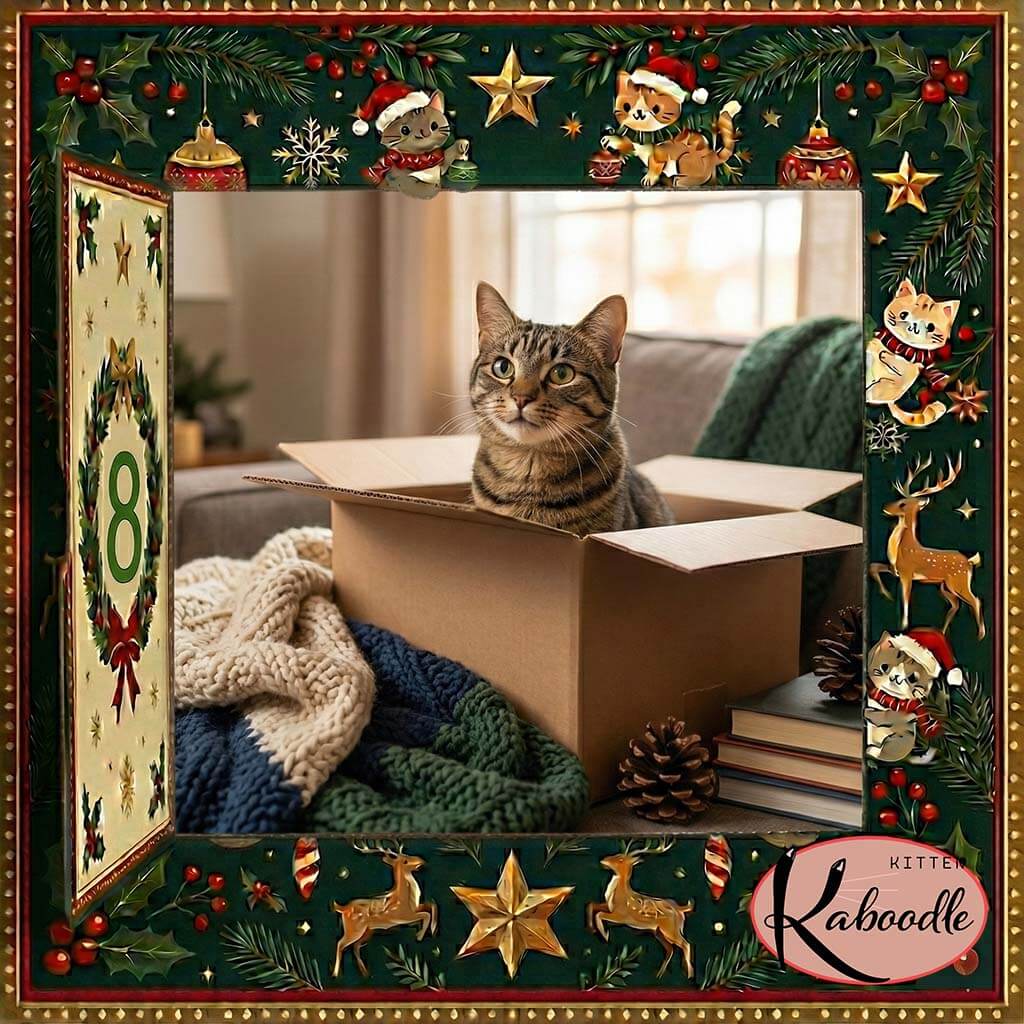
Cat behaviour
Short answer: Cats love boxes because they provide warmth, safety, concealment, and the perfect place to hide, rest, pounce, and play. Boxes offer emotional security and mimic the enclosed spaces cats would naturally choose in the wild.
Written by Paul Denman, Cat Welfare Writer at Kitten Kaboodle
This guide offers general information and is not a substitute for veterinary advice.
Key points at a glance
- Boxes offer safety and security through enclosed sides.
- Cardboard helps cats conserve heat, making it a cosy resting place.
- Boxes act as ideal ambush points to practise hunting instincts.
- Enclosed spaces reduce stress and help many cats feel calmer.
- Cardboard has interesting textures and scents that cats enjoy exploring.
Boxes provide instant safety and security
In nature, cats frequently rest in enclosed or semi enclosed spaces to avoid being seen by predators or prey. A box mimics this environment. Once inside, your cat can see out while remaining hidden.
This makes boxes especially important for anxious or newly adopted cats. A safe space lets a cat decompress and feel in control of their surroundings.
Warmth is a major attraction
Cardboard is a surprisingly good insulator. It traps heat and warms quickly under a cat’s body. Since cats enjoy warmer resting temperatures than humans, a box becomes a perfect little microclimate.
Small boxes warm fastest, which is why many cats squeeze themselves into spaces that seem far too tiny for them.
Boxes help cats manage stress
Several studies in feline behaviour research show that hiding spaces reduce stress in both shelter and home environments. A box gives a cat a temporary retreat where they feel protected.
When a cat hides in a box, they are not being antisocial. They are simply using a coping strategy that helps regulate their emotional state.
Boxes are perfect for play and hunting practice
Cats are ambush predators. Boxes provide:
- A vantage point.
- A place to hide before pouncing.
- A safe spot to observe movement.
Many guardians notice their cats darting in and out of boxes, tapping toys from inside, or leaping out at unsuspecting feet. This is all natural hunting behaviour channelled into harmless play.
The texture and scent are irresistible
Cardboard absorbs familiar scents and feels satisfyingly rough under a cat’s paws. Scratching, chewing, and rubbing against the edges are all enrichment behaviours that help a cat feel at ease in their territory.
How to make box play safe and enriching
Boxes are simple enrichment tools with big benefits. To keep them safe:
- Remove any tape, staples, or loose string.
- Cut extra entry holes for added fun.
- Add a blanket for warmth if your cat prefers soft textures.
- Rotate boxes every few weeks to keep things interesting.
More Advent Calendar questions
Box obsession is just one of the many charming quirks cats share with us. You might also enjoy these Advent entries:
Frequently asked box questions
- Why does my cat sit in a box even if it is far too small?
- Small spaces feel safe and help conserve warmth. Cats naturally prefer snug resting spots.
- Is eating cardboard normal?
- Light chewing is common, but excessive eating may indicate boredom or stress. Offering more enrichment can help.
- Why does my cat scratch the edges of the box?
- Scratching deposits scent and helps maintain nail health. Cardboard provides a satisfying texture for this purpose.
Enjoy discovering your cat’s quirky comforts?
Continue your Advent journey through our Articles section,
and share your funniest box moments with us on social media.
🐾 May every box bring joy, warmth, and a perfect place to hide. 🐾